 4.5
4.5Telescope
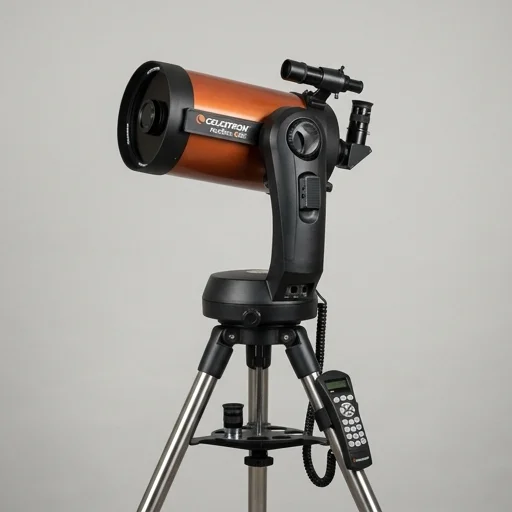
Celestron NexStar 6SE
- Computerized GoTo mount
- Compact 6-inch aperture
- Easy SkyAlign setup
Read review
 Nebula Porch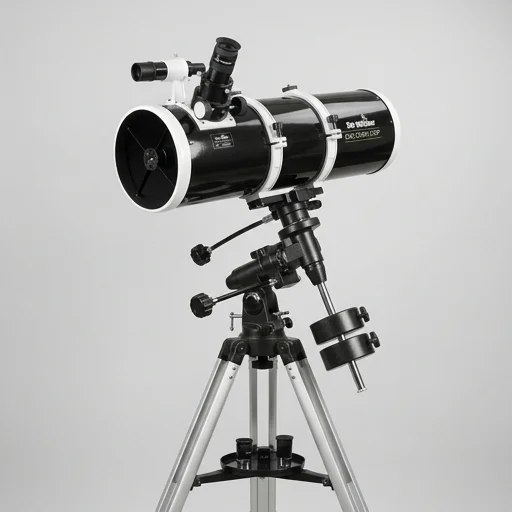
Sky-Watcher
★★★★☆ 4.5/5
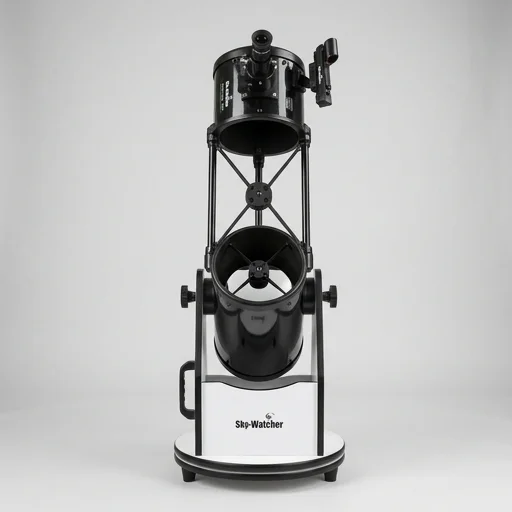
The Sky-Watcher Explorer 150P is a fantastic entry-to-intermediate level Newtonian reflector that delivers impressive views of planets, the Moon, and deep-sky objects thanks to its generous 150mm aperture and fast f/5 focal ratio.
As an Amazon Associate we earn from qualifying purchases. Price and availability are checked at the retailer.
Verdict
The Sky-Watcher Explorer 150P is a fantastic entry-to-intermediate level Newtonian reflector that delivers impressive views of planets, the Moon, and deep-sky objects thanks to its generous 150mm aperture and fast f/5 focal ratio. While it requires some maintenance like collimation and benefits from eyepiece upgrades, its optical quality and versatility make it one of the best value telescopes in its class for hobbyists serious about exploring the night sky.
Full review
The Sky-Watcher Explorer 150P is a 150mm (6-inch) Newtonian reflector telescope built for amateur astronomers who want a meaningful step up in aperture without straying into unwieldy or overly technical territory. With a focal length of 750mm and a fast f/5 focal ratio, this parabolic mirror design gathers substantially more light than smaller refractors or reflectors, revealing fainter deep-sky objects like nebulae, star clusters, and galaxies while still delivering crisp, high-contrast views of the Moon and planets. The parabolic primary mirror, as opposed to a simple spherical one, corrects for spherical aberration at this aperture and focal ratio, ensuring that images remain sharp across the field of view rather than softening toward the edges as cheaper designs often do.
Optically, the Explorer 150P uses a fully coated glass mirror set that maximizes light transmission and minimizes internal reflections, paired with a rack-and-pinion focuser that accepts standard 1.25-inch eyepieces for smooth, precise focusing. The fast f/5 ratio makes this telescope particularly well-suited to wide-field views of star fields and extended deep-sky objects, while still having enough focal length to push magnification for lunar and planetary observation when paired with shorter focal-length eyepieces or a Barlow lens. This versatility makes the 150P a genuine all-rounder rather than a niche instrument locked into either planetary or deep-sky use, and its tube is proportioned to keep the telescope maneuverable despite the generous aperture.
Mechanically, the tube is typically supplied on an equatorial mount such as the EQ3-2, which allows for manual tracking of celestial objects as they drift across the sky due to Earth's rotation, an important feature once magnification increases and objects begin to slip out of the field of view quickly. The mount's slow-motion controls let observers make fine adjustments without jostling the telescope, and the included accessories, typically a couple of eyepieces and a finder scope, get newcomers observing right out of the box. Its combination of light-gathering power, optical correction, and a stable, trackable mount makes the Sky-Watcher Explorer 150P a popular choice for those transitioning from an entry-level telescope to something capable of serious, satisfying deep-sky and planetary observation.
The trade-off
6 strengths · 5 compromises
Nearby
Closest matches in Telescopes by aperture and score.
4.5Telescope
 4.5
4.5Telescope
 4.5
4.5Telescope
 4.5
4.5Dobsonian Telescope