 4.3
4.3Telescope
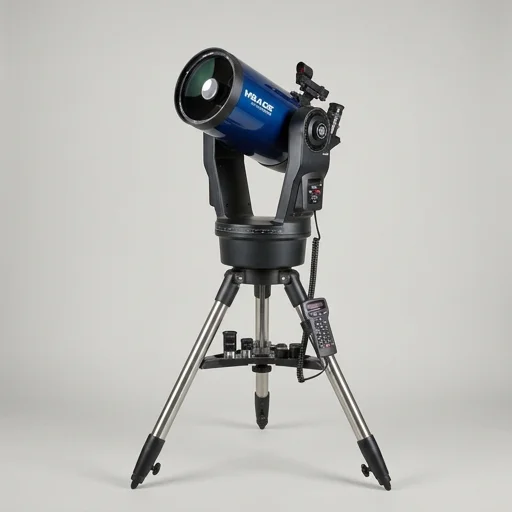
Meade ETX125 Observer
- Computerized GoTo tracking
- Compact portable design
- Sharp planetary views
Read review
 Nebula Porch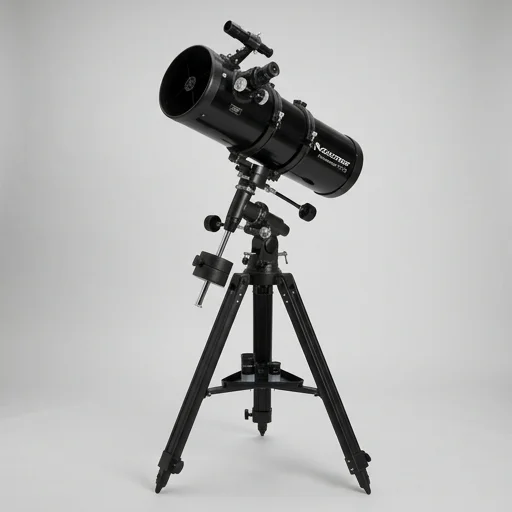
Celestron
★★★★☆ 3.7/5
The Celestron PowerSeeker 127EQ offers a generous aperture and reasonable optical tube for a very approachable price, making it a popular pick for first-time stargazers.
As an Amazon Associate we earn from qualifying purchases. Price and availability are checked at the retailer.
Verdict
The Celestron PowerSeeker 127EQ offers a generous aperture and reasonable optical tube for a very approachable price, making it a popular pick for first-time stargazers. While the stock eyepieces and mount hardware are budget-grade and require patience to master, upgrading the eyepiece and learning basic collimation unlocks genuinely satisfying views of the Moon, Saturn's rings, and Jupiter's cloud bands. It's a solid entry point if you temper expectations and are willing to tinker a little.
Full review
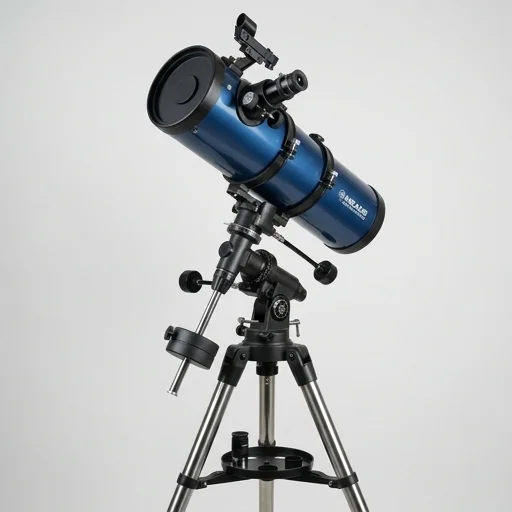
The Celestron PowerSeeker 127EQ is a Newtonian reflector telescope built for beginner and intermediate astronomers who want real aperture without breaking the bank. With a 127mm (5-inch) primary mirror and 1000mm focal length, it gathers enough light to reveal Saturn's rings, the cloud bands of Jupiter, lunar craters, and brighter deep-sky objects like the Orion Nebula and the Andromeda Galaxy. The optical tube sits on a German equatorial mount (EQ), which allows for more precise tracking of celestial objects as they move across the sky, a feature that appeals to hobbyists ready to move beyond a simple alt-azimuth mount and start learning how to compensate for Earth's rotation manually.
The PowerSeeker 127EQ comes bundled with two eyepieces, a 20mm and a 4mm, delivering magnifications of 50x and 250x respectively, along with a 3x Barlow lens that effectively triples the power of either eyepiece for even closer views of planetary detail. A red dot finderscope is included to help you locate targets before centering them in the main optical tube, and the accessory tray doubles as a stabilizing brace for the tripod legs while keeping eyepieces and small tools within reach during a session. The rack-and-pinion focuser offers smooth, precise adjustments, letting users dial in sharp focus on both terrestrial daytime targets and dim nighttime objects.
Constructed with an aluminum tripod and a manual slow-motion control on the mount, the PowerSeeker 127EQ is designed to be portable enough for backyard setups or trips to darker rural skies, yet sturdy enough to minimize vibration during observation. Assembly requires no tools, making it accessible for those new to the hobby, while the included Starry Night software introduces users to basic navigation of the night sky and helps plan observing sessions around visible planets, constellations, and lunar phases. As an entry point into Newtonian reflector astronomy, this telescope balances aperture, portability, and price, giving newcomers a genuine astronomical instrument capable of years of exploration as their skills and interests grow.
The trade-off
5 strengths · 5 compromises
Nearby
Closest matches in Telescopes by aperture and score.
4.3Telescope
 4.5
4.5Dobsonian Telescope
 4.4
4.4Telescope
 4.2
4.2Telescope