 4.7
4.7Astronomy Camera
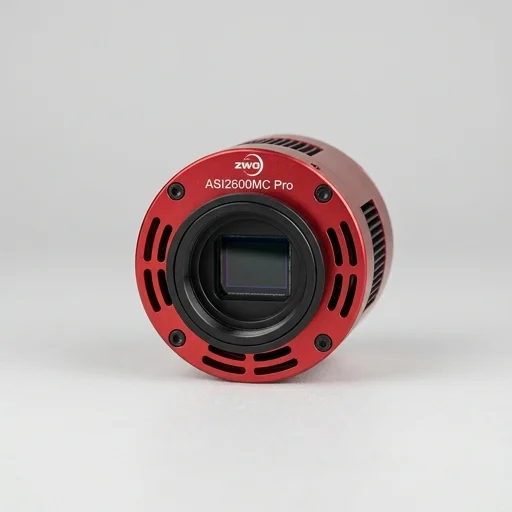
ZWO ASI2600MC Pro Astronomy Camera
- 26MP color sensor
- Deep cooling to -35°C
- Low noise imaging
Read review
 Nebula Porch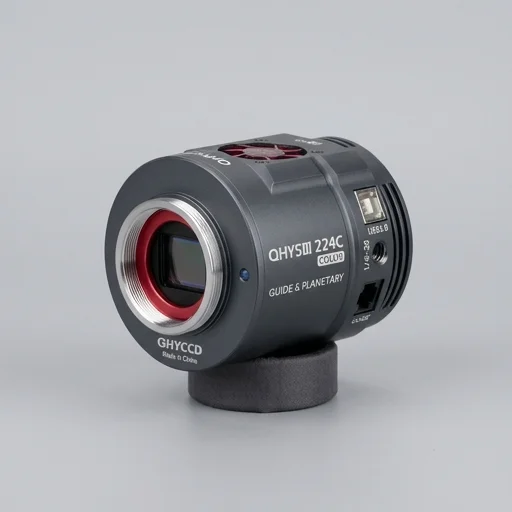
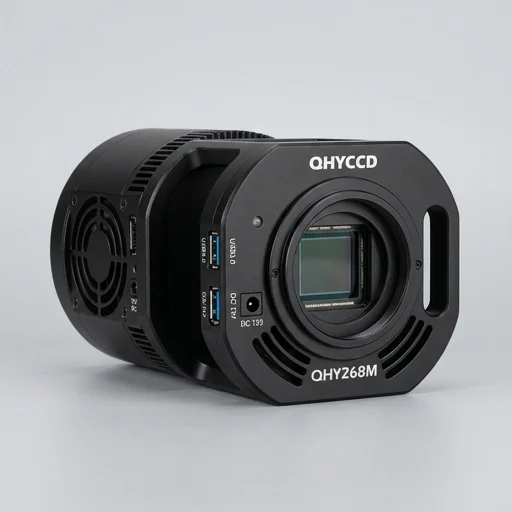
QHYCCD
★★★★☆ 4.5/5
The QHYCCD QHY5III 224C is a superb entry-level to intermediate camera for planetary, lunar, and solar imaging, and it doubles nicely as a guide camera thanks to its ST4 port.
As an Amazon Associate we earn from qualifying purchases. Price and availability are checked at the retailer.
Verdict
The QHYCCD QHY5III 224C is a superb entry-level to intermediate camera for planetary, lunar, and solar imaging, and it doubles nicely as a guide camera thanks to its ST4 port. Its high frame rate and sensitive IMX224 sensor make it a favorite among planetary imagers using lucky imaging techniques. It's not designed for deep-sky astrophotography due to its small sensor and lack of cooling, but for its intended use case it delivers excellent value and performance.
Full review
The QHYCCD QHY5III 224C is a compact color CMOS astronomy camera built around the Sony IMX224 sensor, a chip prized among astrophotographers for its excellent low-light sensitivity and low read noise. Housed in QHYCCD's rugged aluminum shell with a standard 1.25-inch nosepiece, this camera is designed to slot easily into most telescope focusers, making it a natural fit for both refractors and reflectors used in planetary and lunar imaging. Its USB 3.0 interface allows for fast data transfer, which is essential when capturing high frame rate video sequences that are later stacked to produce sharp, detailed images of solar system targets like Jupiter, Saturn, Mars, and the Moon.
What sets the QHY5III 224C apart is its combination of a 1/3-inch sensor format with a high sensitivity rating and a fast maximum frame rate, allowing amateur astronomers to capture thousands of frames in a short imaging session. This lucky imaging approach lets users select only the sharpest frames from a video capture, minimizing the effects of atmospheric turbulence and yielding remarkably crisp planetary portraits. The camera also doubles effectively as an autoguider for deep-sky imaging setups, thanks to its high sensitivity and ability to detect faint guide stars, giving it real versatility beyond pure planetary work. Its global shutter and low noise characteristics further support long-exposure guiding tasks without introducing unwanted artifacts into the guiding process.
Bundled with QHYCCD's capture software and compatible with popular third-party platforms like SharpCap and FireCapture, the QHY5III 224C integrates smoothly into existing astrophotography workflows on Windows, and to a good extent on Linux and macOS as well. Its compact size and lightweight build mean it adds minimal load to a telescope's focuser, an important consideration for imagers using smaller or more delicate optical tubes. Whether mounted behind a Barlow lens for high-magnification planetary detail or used as a dedicated guide camera riding alongside a main imaging scope, the QHY5III 224C offers an accessible entry point into serious astronomical imaging without demanding a steep investment, making it a mainstay recommendation for hobbyists advancing beyond basic smartphone astrophotography.
The trade-off
6 strengths · 5 compromises
Nearby
Closest matches in Cameras & imaging by aperture and score.
4.7Astronomy Camera
 4.7
4.7Astronomy Camera
 4.7
4.7Astronomy Camera
 4.6
4.6Astronomy Camera