 4.6
4.6Smart Telescope
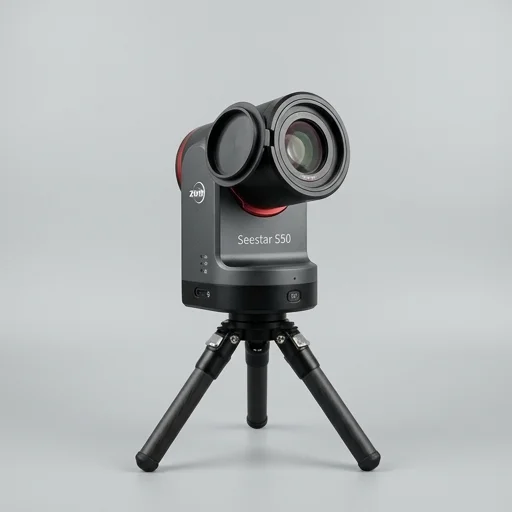
ZWO Seestar S50 Smart Telescope
- Fully automated stargazing
- Beginner-friendly astrophotography
- Portable all-in-one design
Read review
 Nebula Porch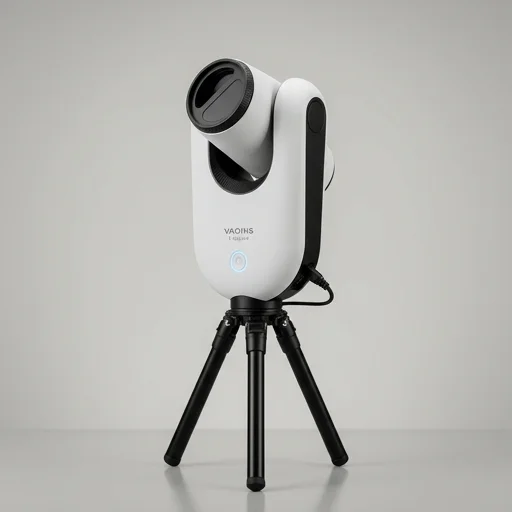
Vaonis
★★★★☆ 4.3/5
Vaonis Stellina is a excellent choice for beginners and casual astrophotographers who want stunning deep-sky images without the steep learning curve of traditional telescopes.
As an Amazon Associate we earn from qualifying purchases. Price and availability are checked at the retailer.
Verdict
Vaonis Stellina is a excellent choice for beginners and casual astrophotographers who want stunning deep-sky images without the steep learning curve of traditional telescopes. Its smart automation and app integration make stargazing effortless, though experienced astronomers may find its lack of manual control and premium price limiting.
Full review
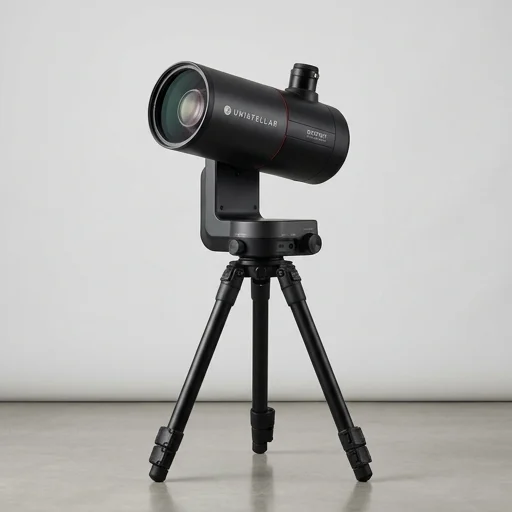
Vaonis Stellina represents a striking departure from traditional telescope design, trading eyepieces and tripods full of knobs for a sleek, monolithic body that looks more like a piece of modern sculpture than an astronomical instrument. Inside that smooth white shell lies a 400mm focal length optical system paired with a Sony sensor, working in tandem with onboard software that automatically handles polar alignment, focusing, and star tracking. Rather than peering through an eyepiece, users interact entirely through the Stellina app on a smartphone or tablet, which drives the telescope to a chosen target, stacks exposures in real time, and gradually reveals nebulae, galaxies, and star clusters directly on screen as the image builds in clarity and depth.
What makes Stellina particularly compelling for newcomers and casual stargazers is how thoroughly it removes the traditional barriers to deep-sky astrophotography. There is no need to manually locate faint objects, calculate exposure settings, or manage bulky mounts and counterweights; the device essentially functions as a robotic observatory in miniature. Its built-in battery allows for a few hours of untethered operation, and the enclosed optical tube protects the internals from dust and dew, making it practical for backyard use in a way that open-tube reflectors and refractors often are not. The catalog of automatically recognized targets, curated through the app, guides users toward reliably good results, so even a first session under reasonably dark skies can yield a respectable image of the Orion Nebula or the Andromeda Galaxy.
That said, Stellina is not designed for those who want the classic experience of manually navigating the night sky or peering through an eyepiece at Saturn's rings with their own eye. Its resolving power and sensor size are tuned for wide-field deep-sky imaging rather than high-magnification planetary viewing, which places it in a distinct category from conventional Dobsonians or Schmidt-Cassegrains. For its intended audience, though, the combination of Vaonis's engineering, the elegant industrial design, and the app-driven simplicity make Stellina one of the more approachable entries into astrophotography, turning what once required years of practice and expensive gear into something closer to pointing a smart device at the sky and letting the technology do the rest.
The trade-off
5 strengths · 5 compromises
Nearby
Closest matches in Smart telescopes by aperture and score.
4.6Smart Telescope
 4.2
4.2Smart Telescope
 4.6
4.6Smart Telescope
 4.5
4.5Smart Telescope