 4.6
4.6Refractor Telescope
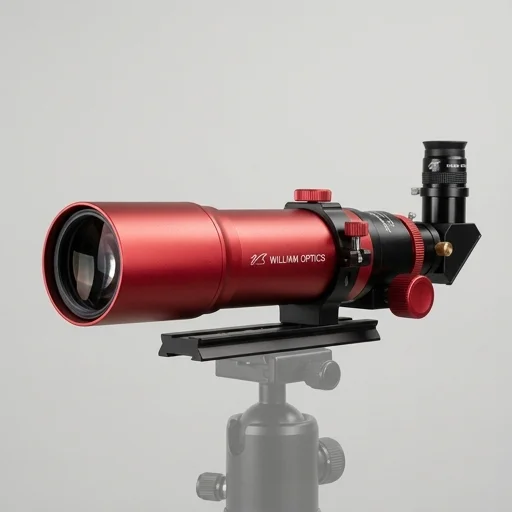
William Optics Zenithstar 61
- Ultra-portable apo refractor
- Sharp color-corrected optics
- Great for astrophotography
Read review
 Nebula Porch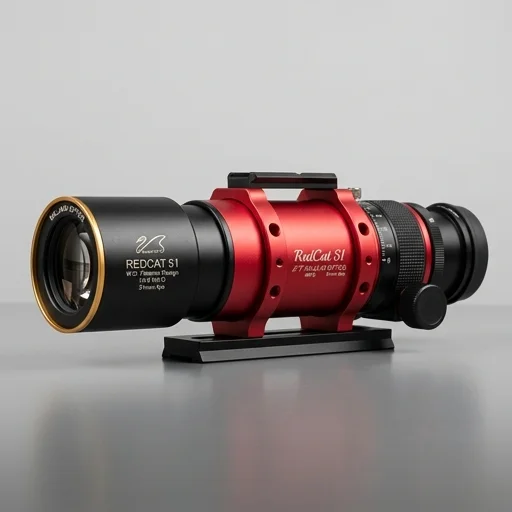
William Optics
★★★★★ 4.6/5
The William Optics RedCat 51 is a superb compact astrograph aimed squarely at wide-field astrophotographers who want pinpoint stars edge-to-edge with minimal setup fuss.
As an Amazon Associate we earn from qualifying purchases. Price and availability are checked at the retailer.
Verdict
The William Optics RedCat 51 is a superb compact astrograph aimed squarely at wide-field astrophotographers who want pinpoint stars edge-to-edge with minimal setup fuss. While it isn't intended for high-magnification planetary viewing, its optical quality, portability, and thoughtful design make it a favorite among imagers using small mounts or travel setups. It's a premium-priced but well-executed tool for anyone serious about deep-sky imaging in a small package.
Full review
The William Optics RedCat 51 is a compact apochromatic refractor telescope purpose built for astrophotographers who want pinpoint stars and rich color correction without hauling around a heavy optical tube. Its 51mm aperture and 250mm focal length yield a fast f/4.9 system that pairs beautifully with full frame and APS-C cameras, delivering a wide, flat field ideal for capturing nebulae, star clusters, and expansive Milky Way vistas. The four element optical design, built around a premium FPL-53 extra low dispersion glass element, virtually eliminates chromatic aberration, producing crisp, true to color images even at the edges of the frame, a feat that many refractors twice its size struggle to achieve.
What immediately sets the RedCat 51 apart is its striking red anodized aluminum body and integrated design philosophy, where the focuser, dew shield, and optical tube form a single sleek unit rather than a collection of add on parts. This built in helical focuser is buttery smooth and holds focus reliably under the weight of a full astrophotography camera, eliminating the sag and slippage that plague rack and pinion focusers on many small refractors. William Optics also engineered the tube with a flocked, knurled dew shield that retracts for storage and extends for imaging sessions, helping to reduce dew formation and stray light without the bulk of an oversized housing, all while keeping the total weight under five pounds, making it an easy companion for lightweight star trackers like the Sky-Watcher Star Adventurer or iOptron SkyGuider Pro.
Beyond its optical performance, the RedCat 51 has become something of a cult favorite among astrophotographers for its portability and plug and play simplicity, since it ships ready to accept popular full frame camera mounts through simple adapters, removing the need for a separate field flattener or reducer that most refractors require as extra purchases. The telescope's built in tripod foot, dual saddle compatibility, and included carry case make it a natural choice for travelers heading to dark sky locations or eclipse chasers who need dependable, grab and go equipment. Whether mounted on a robust equatorial rig for long exposure deep sky imaging or a compact star tracker for a weekend camping trip, the William Optics RedCat 51 consistently delivers tight, round stars and vivid color rendition, cementing its reputation as one of the most versatile small refractors available to amateur astronomers today.
The trade-off
7 strengths · 5 compromises
Nearby
Closest matches in Telescopes by aperture and score.
4.6Refractor Telescope
 4.2
4.2Telescope
 4.2
4.2Telescope
 4.2
4.2Refractor Telescope