 4.4
4.4Telescope
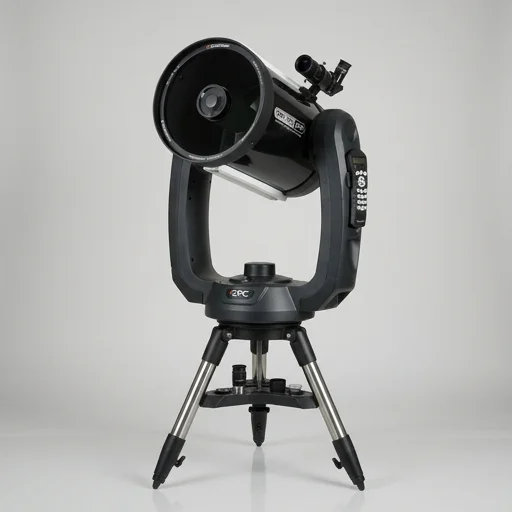
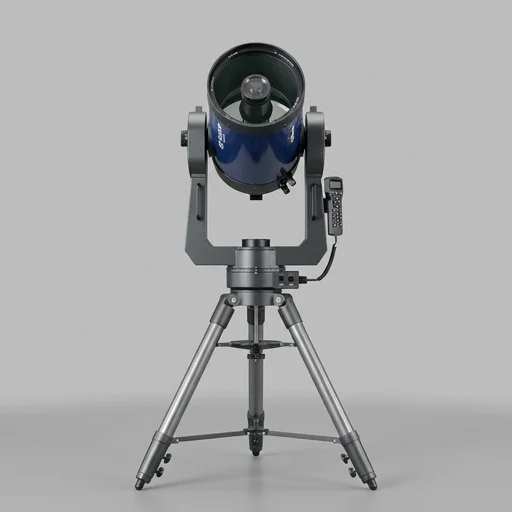
Celestron CPC 1100 GPS
- Large 11-inch aperture
- GPS auto-alignment
- Rock-solid GoTo mount
Read review
 Nebula Porch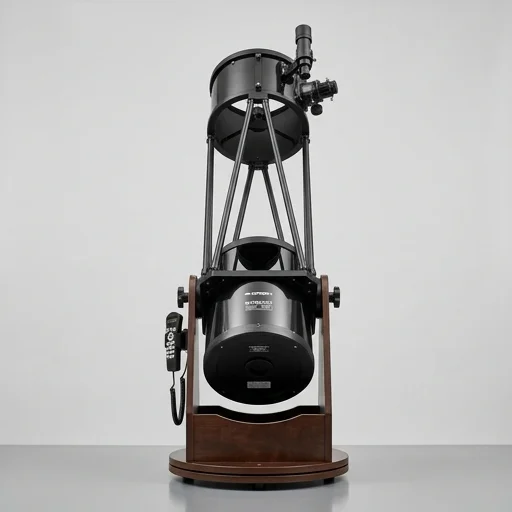
Orion
★★★★★ 4.6/5
The Orion SkyQuest XX12i is a serious aperture powerhouse aimed at intermediate to advanced amateur astronomers who want jaw-dropping views of galaxies, nebulae, and star clusters without paying for a fully computerized GoTo mount.
As an Amazon Associate we earn from qualifying purchases. Price and availability are checked at the retailer.
Verdict
The Orion SkyQuest XX12i is a serious aperture powerhouse aimed at intermediate to advanced amateur astronomers who want jaw-dropping views of galaxies, nebulae, and star clusters without paying for a fully computerized GoTo mount. The IntelliScope locator system bridges the gap between manual Dobsonians and full GoTo scopes, making object hunting far easier once set up. It's heavy and requires patience to master, but the optical performance and value are outstanding for those willing to commit to a large manual scope.
Full review
The Orion Dobsonian XX12i stands as a flagship instrument for serious amateur astronomers who want serious aperture without the price tag of a computerized go-to system that tracks every star automatically. This is a 12-inch (305mm) Newtonian reflector mounted on a rock-solid Dobsonian base, engineered to gather enough light to reveal faint galaxies, planetary nebulae, and globular clusters that smaller scopes simply cannot show. With a focal length of 1500mm and a focal ratio of f/4.9, the XX12i strikes a practical balance between wide-field deep-sky views and enough magnification for detailed planetary and lunar observation. The parabolic primary mirror is precision-figured and fully multi-coated to maximize light transmission and contrast, while the truss-tube design allows the optical tube to collapse for easier transport and storage despite its substantial 12-inch aperture.
What sets the XX12i apart from a standard Dobsonian is Orion's IntelliScope Object Locator system, a digital push-to computer that guides observers to more than 14,000 celestial objects stored in its database. Rather than slewing the telescope automatically like a full go-to mount, the IntelliScope encoder system displays real-time coordinates and directional arrows on a handheld controller, prompting the user to manually nudge the scope until the target is centered in the eyepiece. This hybrid approach preserves the tactile, hands-on experience that Dobsonian enthusiasts value while dramatically shortening the time spent star-hopping through charts, making it especially useful for observers working under light-polluted skies where faint guide stars are hard to find. The base itself uses Teflon bearings for smooth altitude and azimuth movement, allowing fingertip control even with the substantial mass of a 12-inch mirror and tube assembly overhead.
Built for dedicated visual observers, the XX12i ships with two Sirius Plossl eyepieces, a 2-inch Crayford focuser for accepting a range of accessories, and a finder scope to assist with initial alignment of the IntelliScope system. The truss-pole construction, combined with a shroud accessory some owners add separately, helps control stray light and keeps dust off the primary mirror during extended sessions under dark skies. Because of its size and weight, the XX12i is best suited to observers with a dedicated space for assembly and a vehicle capable of transporting its components to darker observing sites, but for those willing to manage its bulk, it rewards them with aperture-driven views of the cosmos that rival much more expensive computerized systems, all while keeping the observer directly engaged in the process of finding and studying each object in the eyepiece.
The trade-off
6 strengths · 6 compromises
Nearby
Closest matches in Telescopes by aperture and score.
4.4Telescope
 4.7
4.7Dobsonian Telescope
 4.6
4.6Dobsonian Telescope
 4.4
4.4Telescope